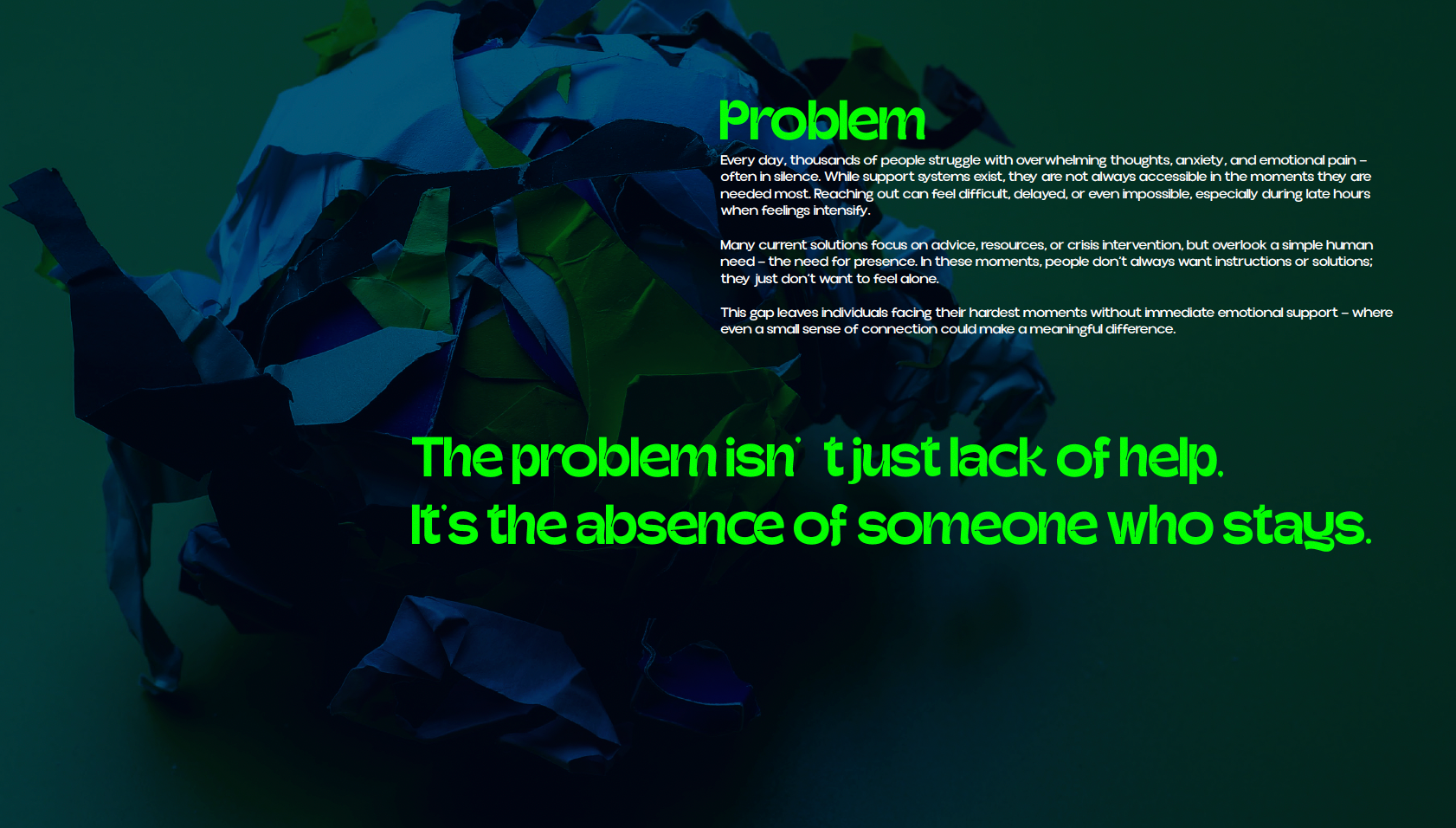
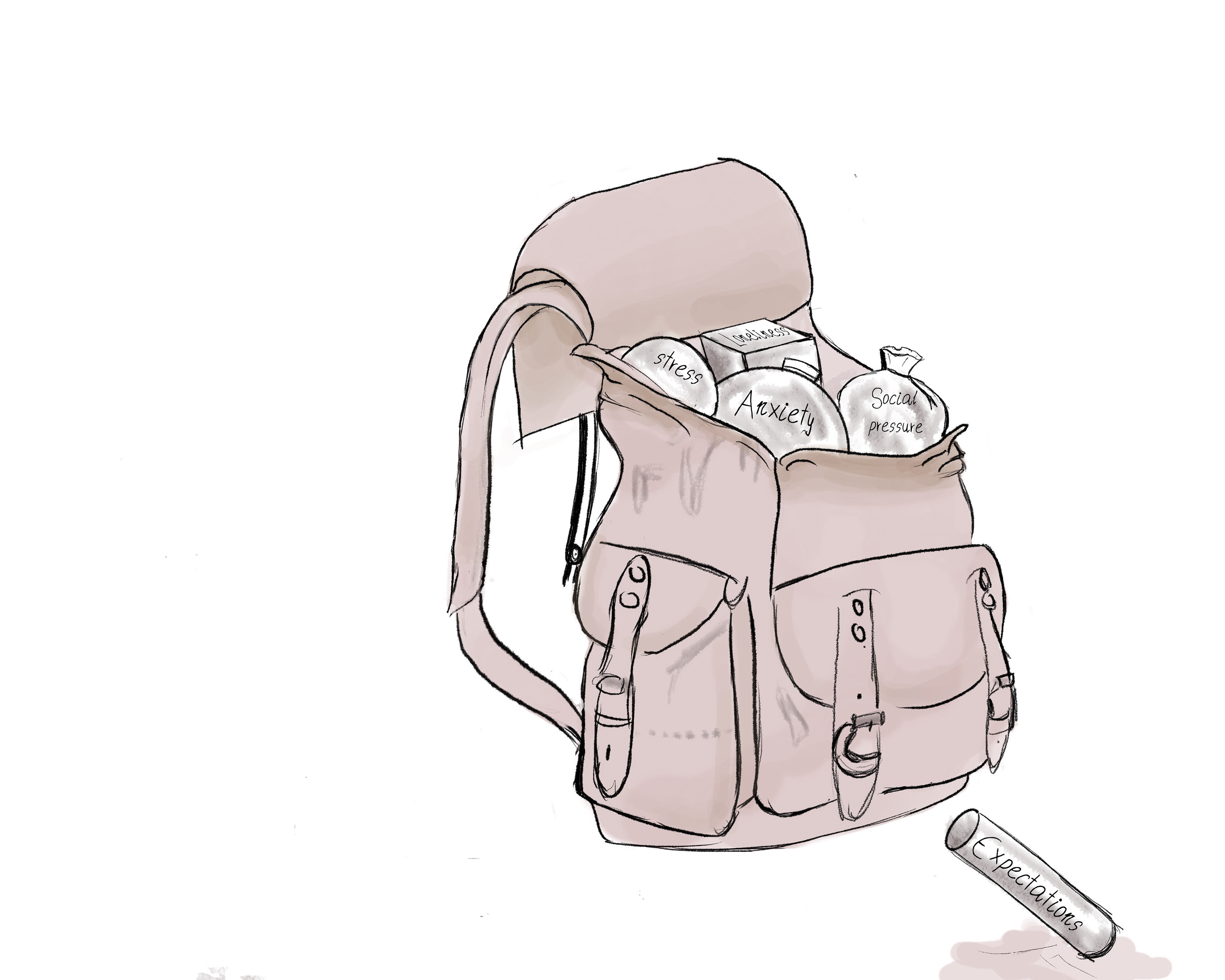
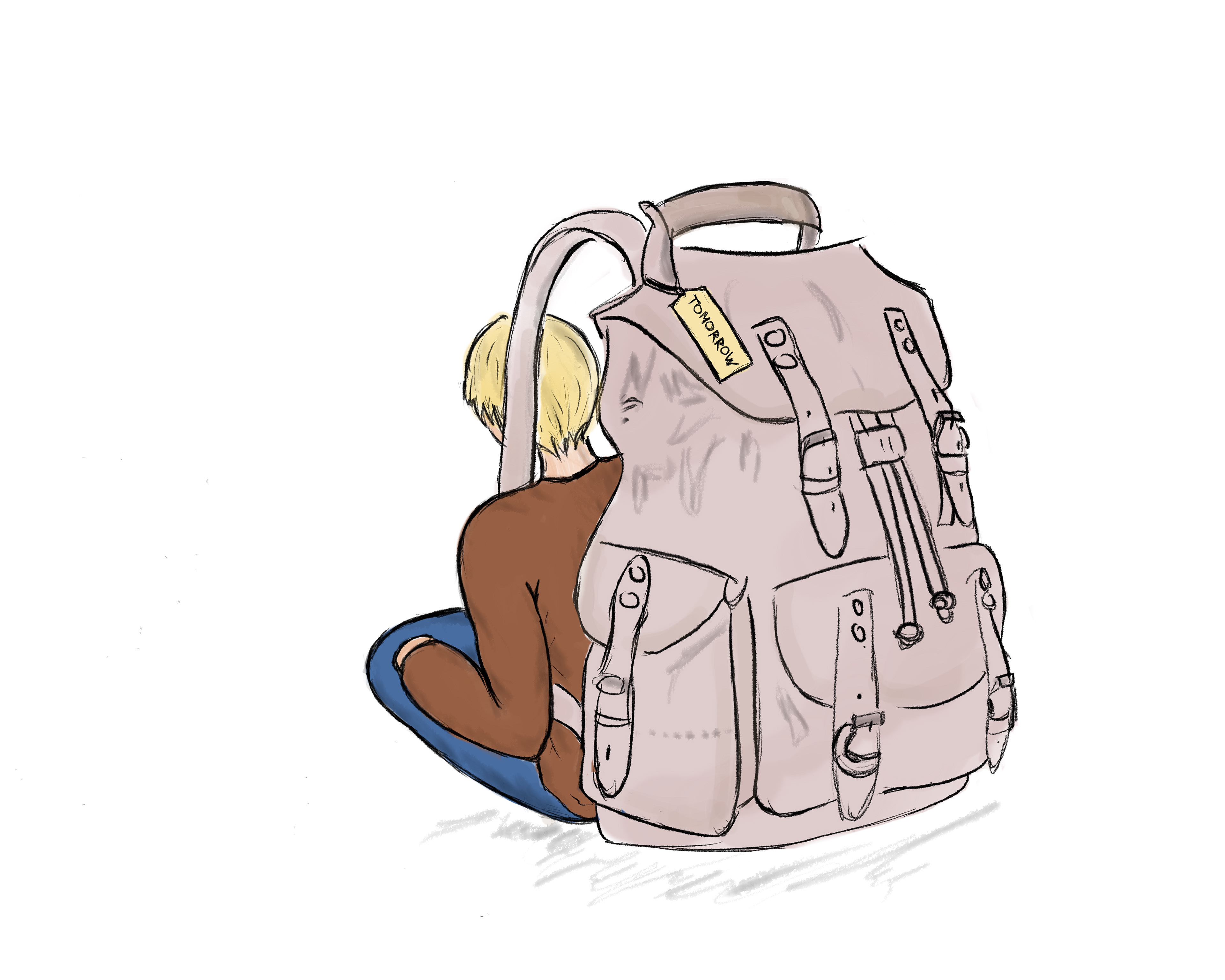
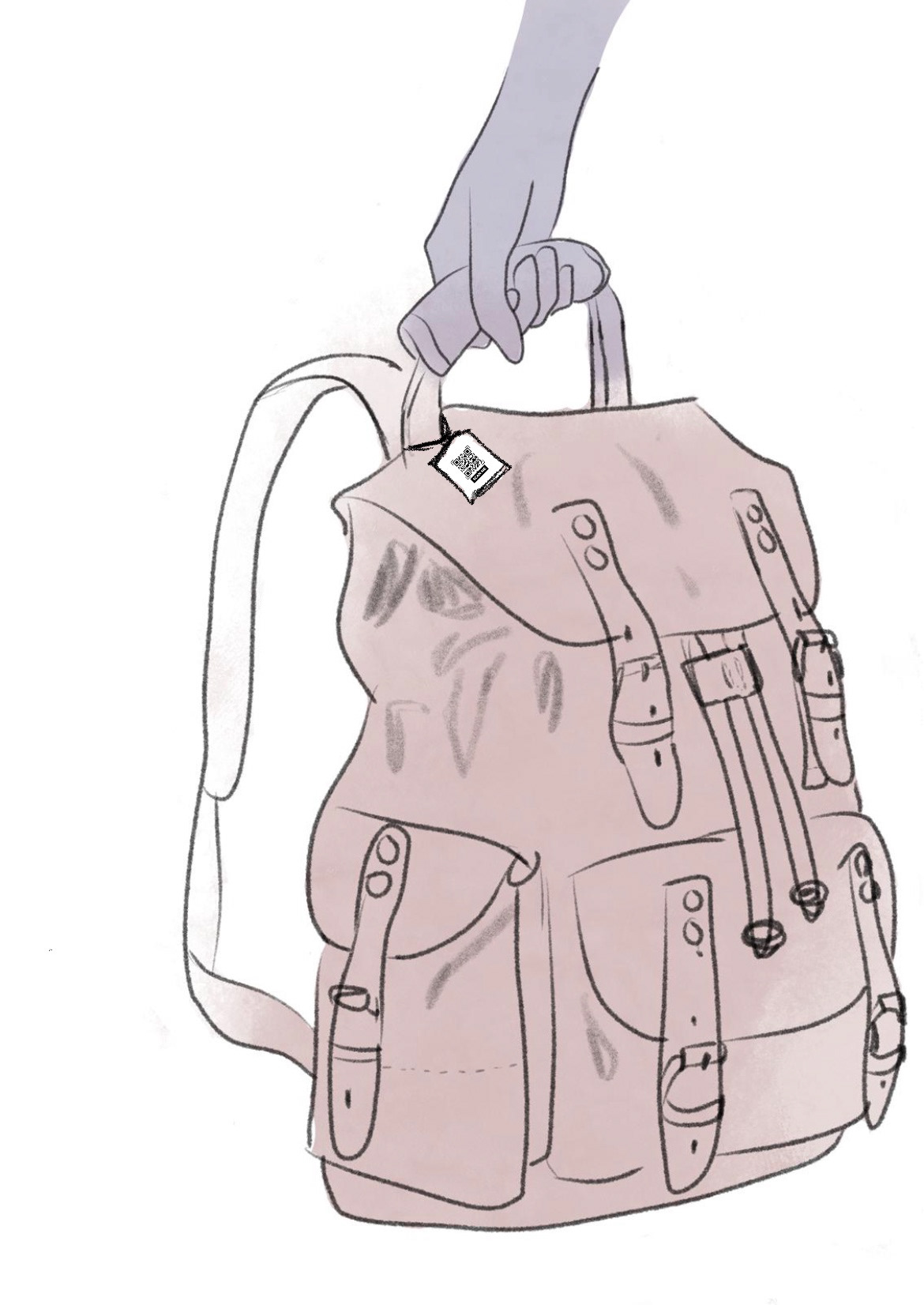
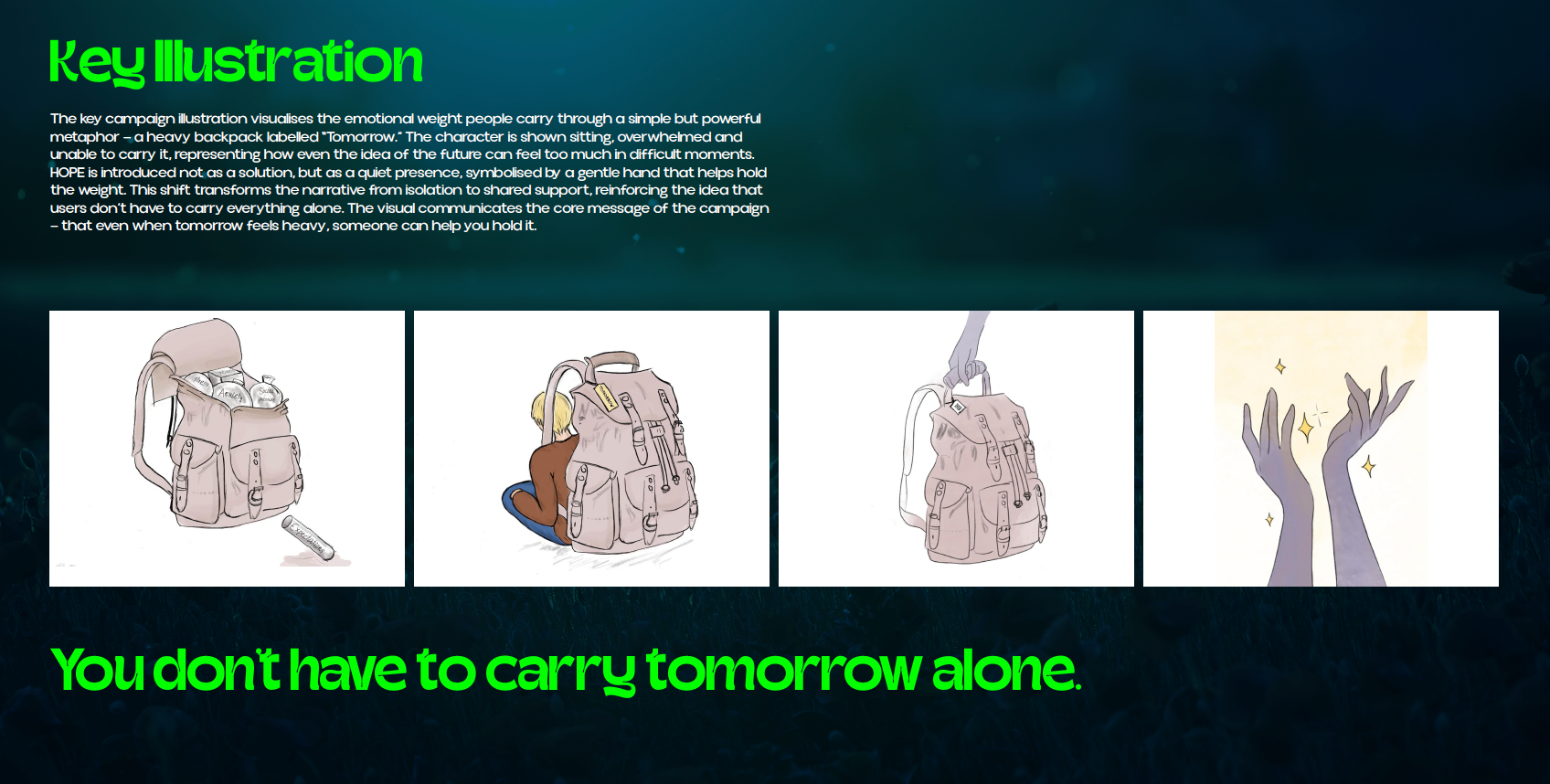
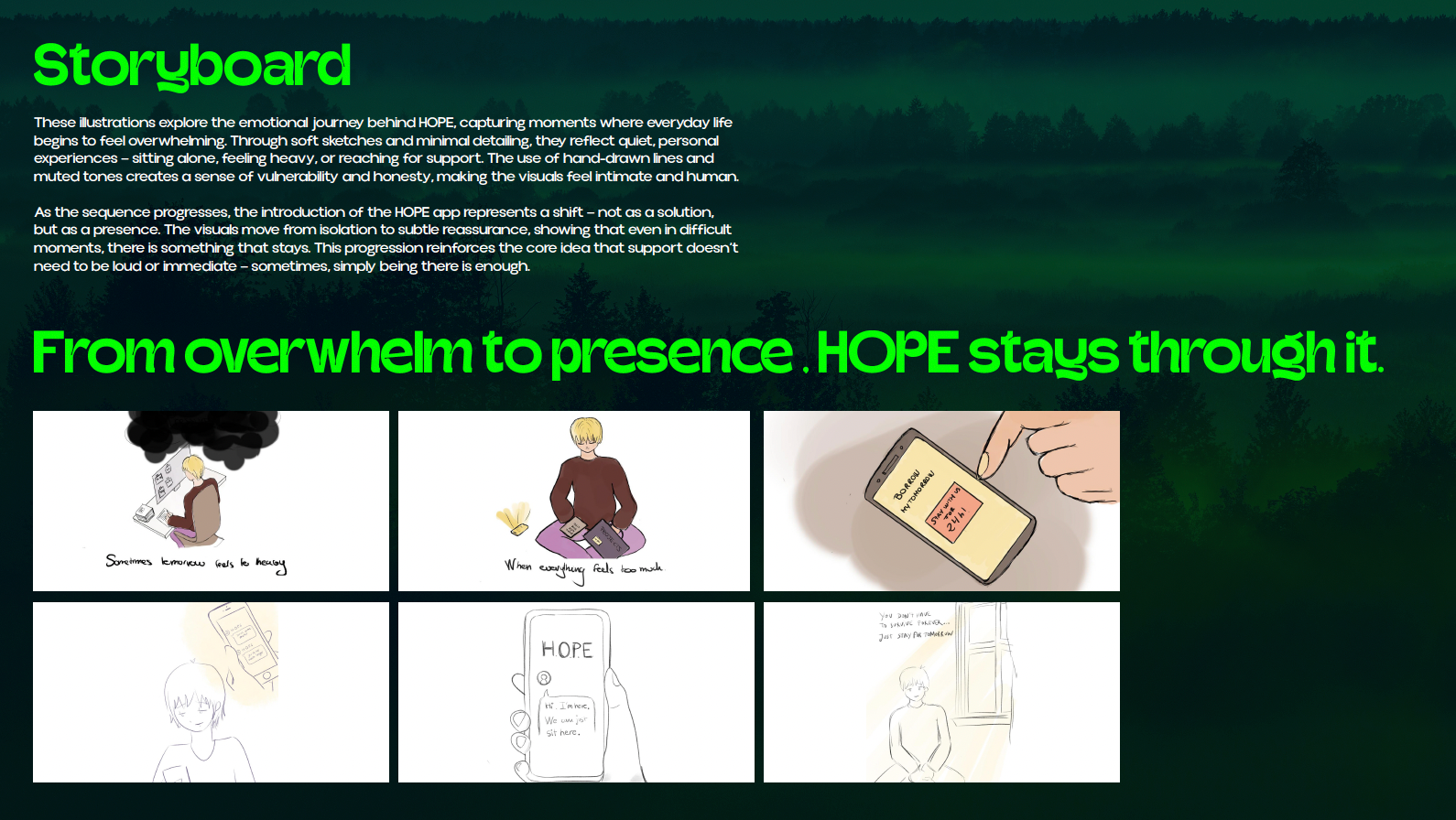

Hope was created with the intention of participating in the D&AD Awards brief surrounding suicide awareness and emotional support.  The project explores how design can become a form of emotional presence during moments of vulnerability. Rather than focusing only on crisis intervention or clinical solutions, HOPE was designed around a simple but deeply human idea: sometimes people do not need answers, they need something or someone that stays.  The concept responds to the growing emotional isolation many people experience silently every day. Feelings such as anxiety, pressure, overwhelm, and loneliness are often invisible, making it difficult for individuals to reach out when they need support most. HOPE aims to bridge that emotional gap through a calm and reassuring support system that focuses on presence, empathy, and connection rather than urgency or instruction.  The project combines branding, UI/UX thinking, illustration, storytelling, and emotional design into a cohesive visual system. The visual identity uses deep blues and vivid greens to symbolise the journey from darkness to healing and hope. Organic textures, blurred imagery, and symbolic illustrations were developed to represent invisible emotional struggles in a subtle and relatable way.  A key part of the project is the use of illustration as metaphor. Visual elements such as the backpack filled with stress, anxiety, social pressure, and expectations represent the emotional weight many people carry internally. Through soft hand-drawn lines and emotionally driven storytelling, the illustrations communicate vulnerability while also introducing reassurance and connection.  The HOPE app itself was imagined as a 24/7 emotional support space offering grounding exercises, breathing guidance, immediate reassurance, and access to trusted contacts or trained professionals. However, the core of the project was never technology alone, it was the emotional experience of feeling accompanied during difficult moments.  Through this project, HOPE redefines support not as something distant or clinical, but as a quiet, constant presence that listens, reassures, and stays. The project ultimately asks how design can create emotional connection and remind people that even in their darkest moments, they are not alone.